When we tell people that Panoptika is focused on Customer Understanding it sometimes seems to confuse them. I guess that’s normal, as the current practice can be different depending on your organization. When we talk a bit more a typical response is “Oh, you mean Business or Customer Intelligence?”, or even, “Market Research?”

We’re not a big fan of the term Customer Intelligence…it kinda sounds like spying, doesn’t it? Your customer needs to know that you want to understand them so you can deliver products and services they want and need, as opposed to trying to seduce them into buying.
So let’s look at a few of the aspects of Customer Understanding that our clients have needed help with, and see if they resonate with you.
In the first example, do you understand where your product or service fits into your customers’ operations? How and when they use it? If they use in in conjunction with other companies’ products? What happens immediately before and after they use your product? If you don’t understand this, you may be missing out on opportunities for line extensions, improved pricing, or other value added services.
How can we help you get a better handle on all of this? First, we help develop a roadmap you can use to walk the customer through their day, focusing on all their daily or weekly tasks, with them as the star of the story, rather than the product you sell. The drawback to this is that often it tries to impose a linear sequence in jobs that are more convoluted. It might be better to use an analogy, such as a Spider Web, to map out the interactions that occur in and around the problems they have to solve, and where your product fits in all of that. In either of these methods, the important part is listening to the story they tell, which will reveal not only the facts, but the emotions they experience.
Another fundamental aspect of Customer Understanding is the ability to deliver the right features for your key customers. It seems everyone has their own way of trying to determine this, but we recommend getting your customers intimately involved in the discussion. Our friends at Conteneo have developed some great tools we often use, regardless of whether you are able to get your customers together in a room, or they are far away and you need to engage them remotely.
If you have the opportunity to get key customers in one place, at an industry conference or site visit, we can use Buy a Feature, a game where players work collaboratively to purchase the features they feel are most important to them. If your team is together, but neither you nor the customer can afford a face-to-face meeting, then the online version, called Decision Engine, may be a better choice. It’s a powerful graphic interface we use to accomplish the same goals, but using a cloud platform and a chat function. Working in teams of up to 8 people, each player has a limited amount of money to spend on the features they feel are most important. The key is they don’t have enough to buy everything they want, so they have to negotiate with the other players to successfully get what’s important to them. This lets you hear the “why” – which is more important than the money when it comes to motivating action. It’s the heart-and-mind part of the story.
As in most Customer Understanding discovery work, the ultimate outcome is a clearer picture of why certain things are important to your customers. It helps reveal the pain they experience, they problem they’re encountering, or the need they can’t always articulate (or won’t, because the idea of a possible solution is beyond their imagination).
Last of all, let’s think about developing empathy, or improving your ability to see things from your customers’ perspective. A tool we’ve found extremely helpful is called an Empathy Map. It’s not a new tool, and you may have seen it before. For our clients, it still always nets some real value. You can use the Empathy Map in a couple of different ways. The most effective is to actually have your customer map out what they hear, what they say, and what they think in a particular situation. Again, we can do this in person, or use an online visualization tool. The second way, which can also be very powerful, is to have you team complete the same exercise, but put themselves in the customer’s shoes. Whether it’s engineering, sales, marketing, or finance, when they start to think about what’s in the customer’s head at the time of interaction – somehow that’s when the magic happens.
If you’d like to learn how to use some of these tools and techniques to strengthen your customer relationships, we’re here to help.
Always sharpening our tools,
Steve and Megann


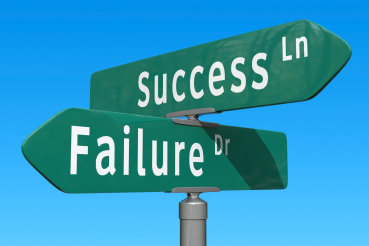 l fast. Does this sound familiar? Failure is the current focus in many schools of “entrepreneurial thinking”. We contend that it is of no consequence whether you failed – rather, it’s what you learned that’s important. For us, “You win or you learn” is the key to keeping going when things don’t turn out quite as we had anticipated.
 been meaning to tackle just keep slipping lower and lower on the to-do list. So are they not that critical after all? Or are you putting your roadmap in jeopardy?
 The View From Here